Bethesda is an established Montgomery County community where mature landscaping, larger lots, and an active commercial spine along Wisconsin Avenue shape the concrete decisions property owners face. Because property age, lot size, and use vary widely across the community, a project in one part of Bethesda can look very different from one a mile away — and the right scope depends on what is actually on the site.
Established Properties, Mature Trees and Larger Lots
Many established Bethesda neighborhoods have exterior concrete that has been in place for decades, so calls here often involve cracked driveway slabs, settled walkway panels, spalling entry steps, and patios that no longer drain the way they once did. Where larger lots are present, properties may have longer or wider driveways, multiple outdoor-use zones, and room for additions — but the scope is larger too, so planning access, sequencing, and drainage becomes more important. Where mature tree cover exists near walkways or driveway edges, root-related movement, drainage, and adjacent grade are factors we look for when evaluating cracked or uneven concrete — we do not claim roots caused a specific problem without inspection.
Residential and Commercial Flatwork Along Bethesda Corridors
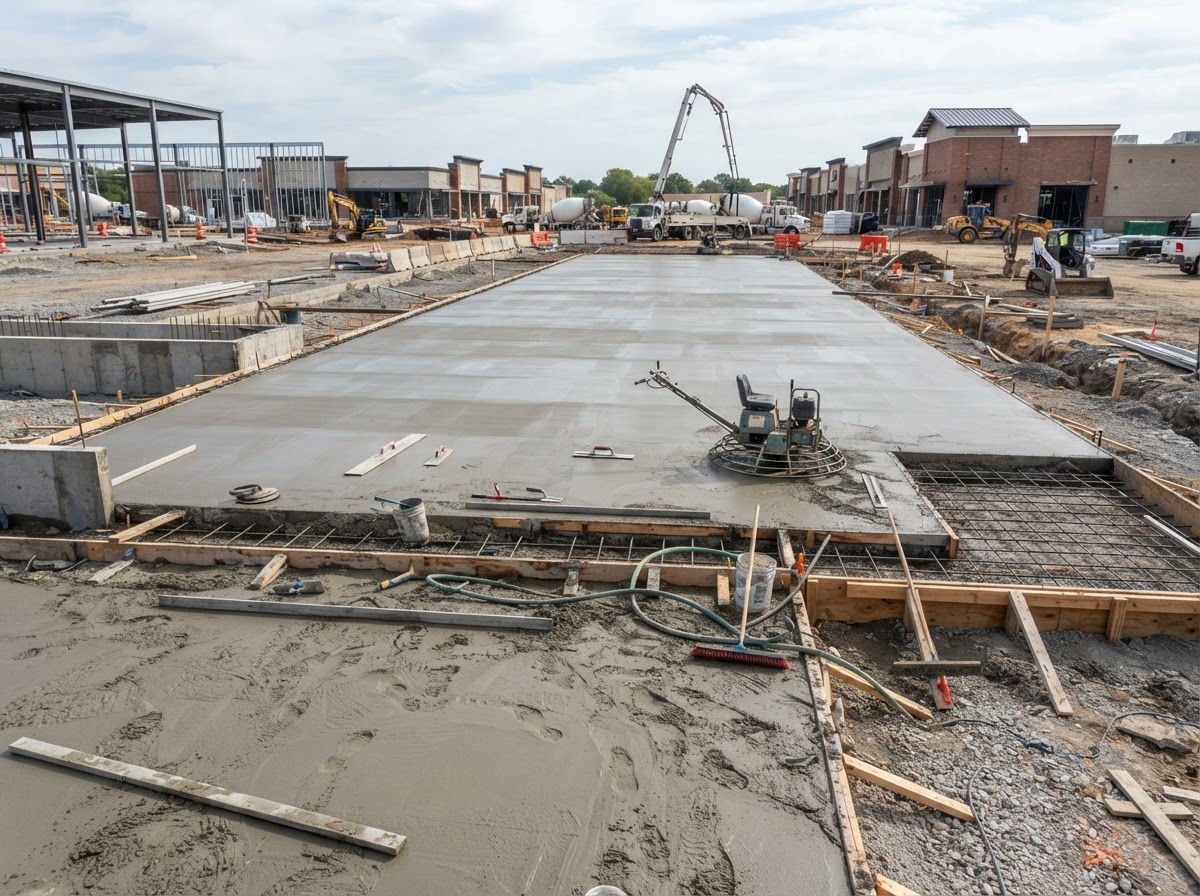
Along Bethesda's commercial corridors, sidewalk repair, entry flatwork, curb work, parking concrete, and resurfacing of worn pedestrian surfaces are common needs. Residential and commercial flatwork here is planned around traffic, pedestrian use, joint layout, and load demands rather than a single fixed spec. We handle private commercial flatwork for individual properties — we do not imply municipal or government contract work. Where a project touches the public right-of-way, permit or approval requirements depend on project type, property jurisdiction, and scope — verify current requirements with the applicable authority before construction.
Drainage, Slope and Stormwater Runoff
Bethesda's mix of older lots and redeveloped properties means drainage patterns are not always what the original grading intended. Where runoff concentrates against a foundation, pools at a garage entry, or erodes the base beneath a walkway or patio, the concrete above it tends to crack, settle, or spall. On driveway and walkway projects we look at slope and runoff first, because a repair that ignores drainage will often fail again. Where water management is the underlying issue, trench drains, regrading, or coordinated drainage planning may be part of the scope.
Maryland Freeze-Thaw and Deicing Exposure
Whatever the neighborhood, exterior concrete in Bethesda has to hold up through Mid-Atlantic seasons — winter freeze-thaw cycles, spring rainfall, summer heat, and deicing salt exposure. Moisture that enters a slab and freezes can drive surface scaling and spalling over time, and deicing salts tracked onto driveways and walkways accelerate surface deterioration. Drainage, joint placement, sealing where appropriate, and a finish suited to the traffic all shape long-term performance. Our freeze-thaw and deicing guide covers the common seasonal deterioration factors, and our drainage and water-management guide explains how runoff and slope affect concrete.
Planning Concrete Improvements for a Bethesda Property
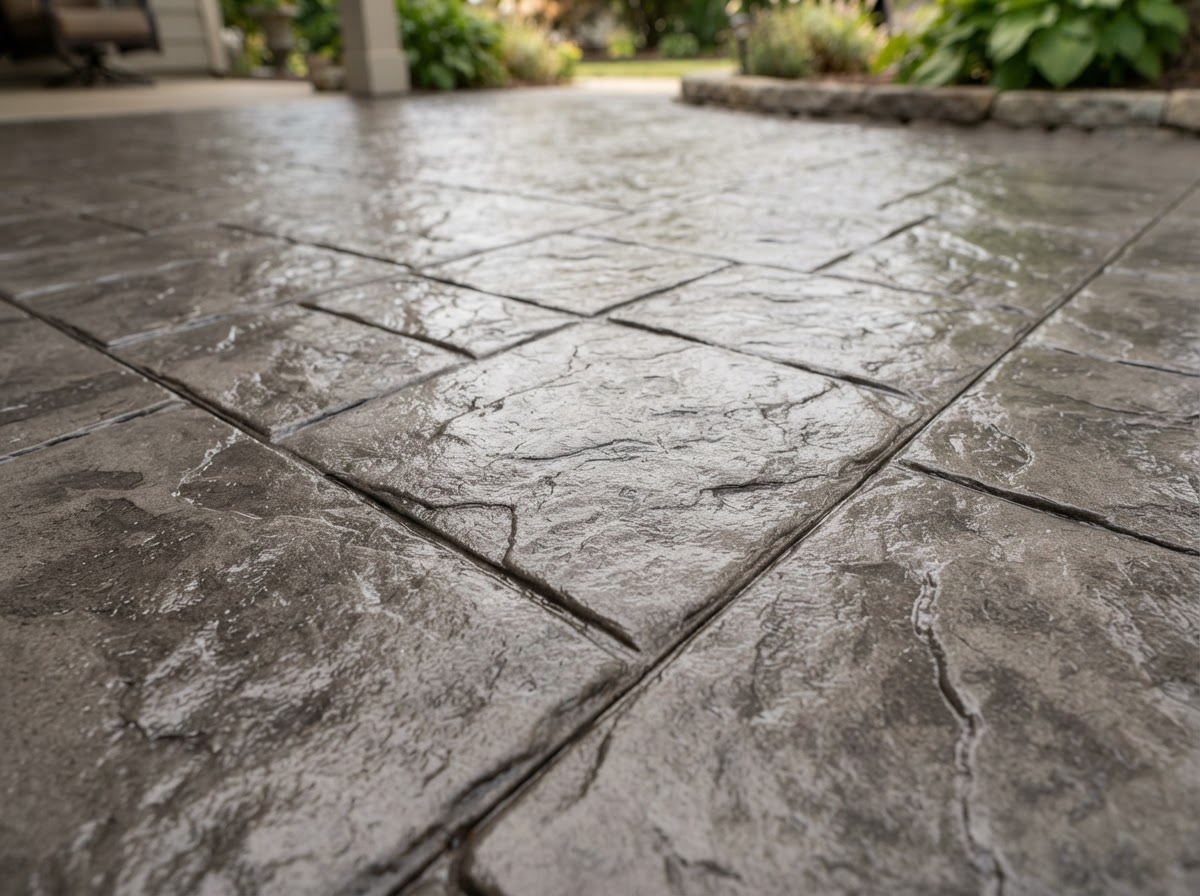
For most Bethesda properties, the key planning decisions are patio installation or replacement for outdoor living, stamped and decorative concrete for patios and entries, repair versus replacement for aging driveways and walkways, resurfacing versus replacement for surfaces with wear, and slab or pad pours for accessory structures. Because the community is established with larger lots and mature landscaping, coordinating drainage, finish, and transitions across multiple surfaces is often part of the plan. We review the slab's condition, whether movement is ongoing, the site's drainage, and how the surface will be used before recommending scope — see our repair vs. replacement and resurfacing vs. replacement guides.