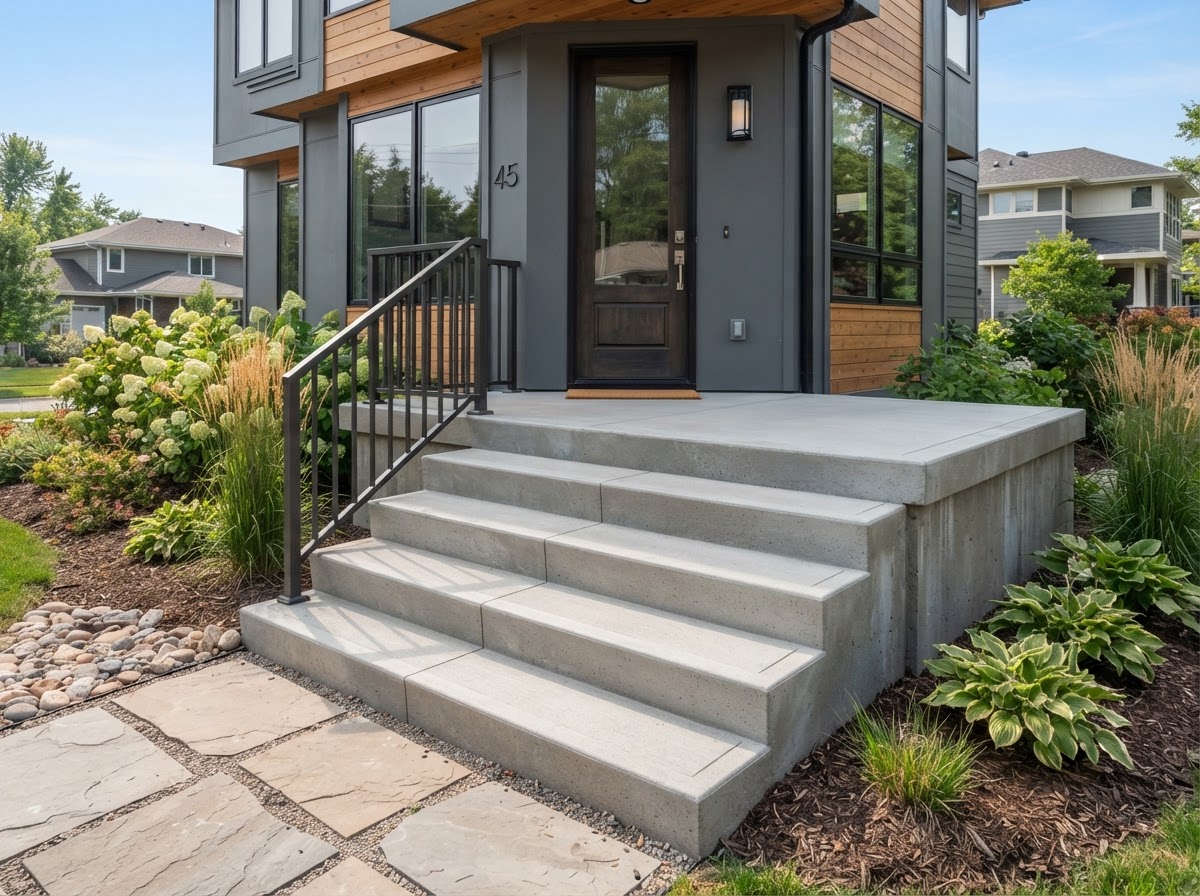
Garrett Park is a small, established residential town in central Montgomery County where concrete needs often center on the connected entry surfaces that tie a property together — walkways, steps, porches, and stoops. Because many homes here sit on compact lots with mature tree canopy, a problem on one surface frequently involves the elevations, drainage, and root environment of the surfaces around it.
Connected Entry Surfaces and Compact Lots
On a compact Garrett Park lot, the walkway, steps, porch, and driveway often sit close together and close to the property line, so fixing one surface usually means considering the ones next to it. A leveled walkway that no longer matches the step creates a new trip hazard; a replaced step that no longer matches the porch creates an uneven entry. We plan connected entry surfaces together where the project scope calls for it so transitions stay safe and drainage keeps working across the whole assembly.
Mature Trees, Roots and Walkway Concrete
Where mature tree canopy exists near walkways, steps, or driveway edges, property owners may need to consider root-related movement, adjacent grade, and drainage when evaluating cracked or uneven concrete. We do not assume roots caused a specific problem without inspection — on-site review determines whether movement, drainage, or surface age is the underlying factor. See our walkways and steps services for connected entry planning.
Drainage, Runoff and Settlement
Where runoff concentrates against a foundation, pools at an entry, or erodes the base beneath a walkway or porch slab, the concrete above tends to crack, settle, or spall. A saturated base is also more vulnerable to freeze-thaw damage. Addressing drainage is often part of a lasting repair — trench drains, regrading, or coordinated drainage planning may be part of the scope where water management is the underlying issue. See our drainage and water-management guide for how runoff and slope affect concrete.
Maryland Freeze-Thaw and Deicing Exposure
Exterior concrete in Garrett Park faces winter freeze-thaw cycles, deicing salts, runoff, snowmelt, and saturated base conditions. Moisture that enters a slab and freezes can contribute to scaling, spalling, and joint deterioration, and deicing salts tracked onto walkways and steps accelerate surface deterioration. Sealing where suitable, maintaining joints, and addressing drainage help a slab resist seasonal damage. Our freeze-thaw and deicing guide covers common seasonal deterioration factors.
Planning Repairs for Established Properties
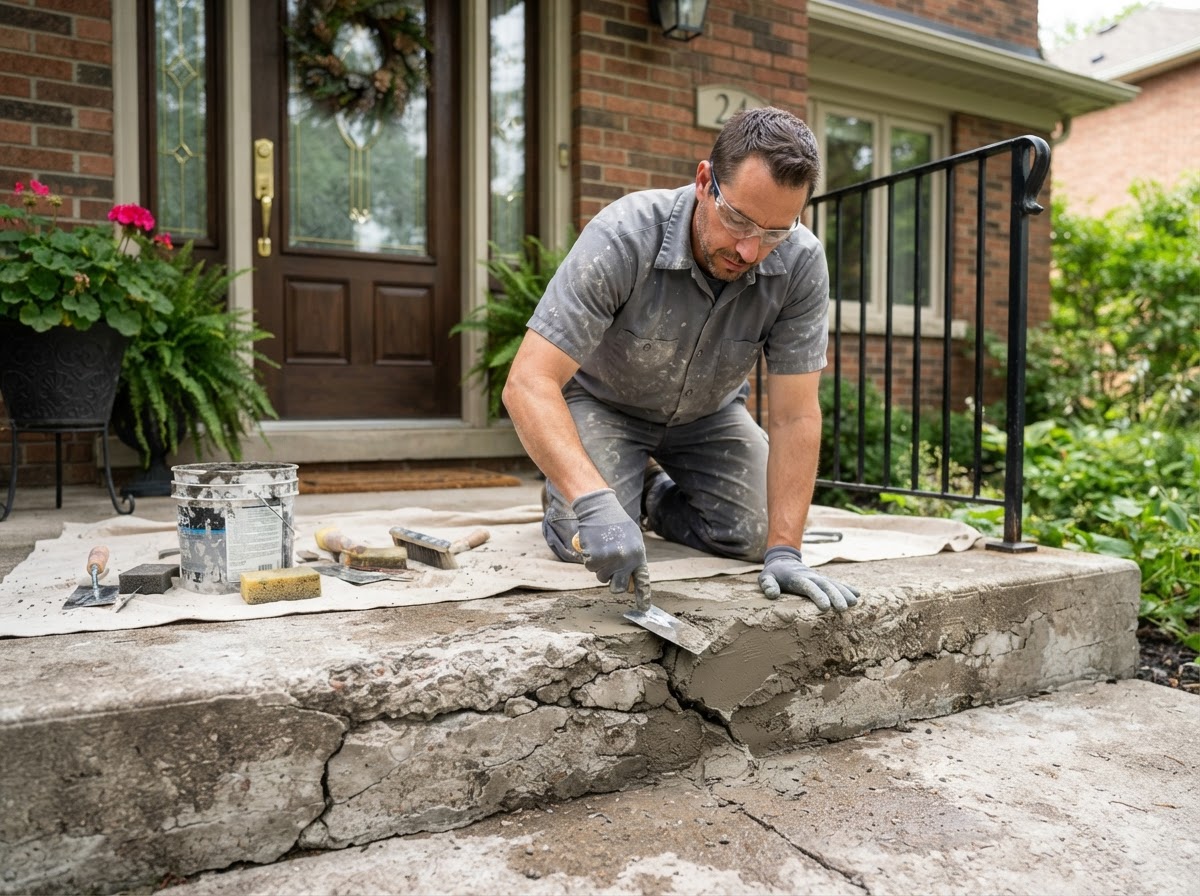
Because much of Garrett Park's housing stock dates from earlier development periods, repair and resurfacing decisions are common here. A sound slab with surface wear may be a resurfacing candidate; a settled but intact slab may be a leveling candidate; widespread cracking or a failed base usually points to replacement. We assess the slab's condition and whether movement is still occurring before recommending a scope — see our repair vs. replacement and resurfacing vs. replacement guides. Where a project involves a structure or the public right-of-way, permit or approval requirements depend on project type, property jurisdiction, and scope.