Germantown is one of the larger communities in Montgomery County, and its concrete needs reflect a mix of established sections, newer construction, and properties with room for outbuildings and equipment. Because development here happened in waves, a project in one part of Germantown can involve brand-new installation while another a few miles away is about repairing or replacing decades-old flatwork.
Newer Development and Accessory Slabs
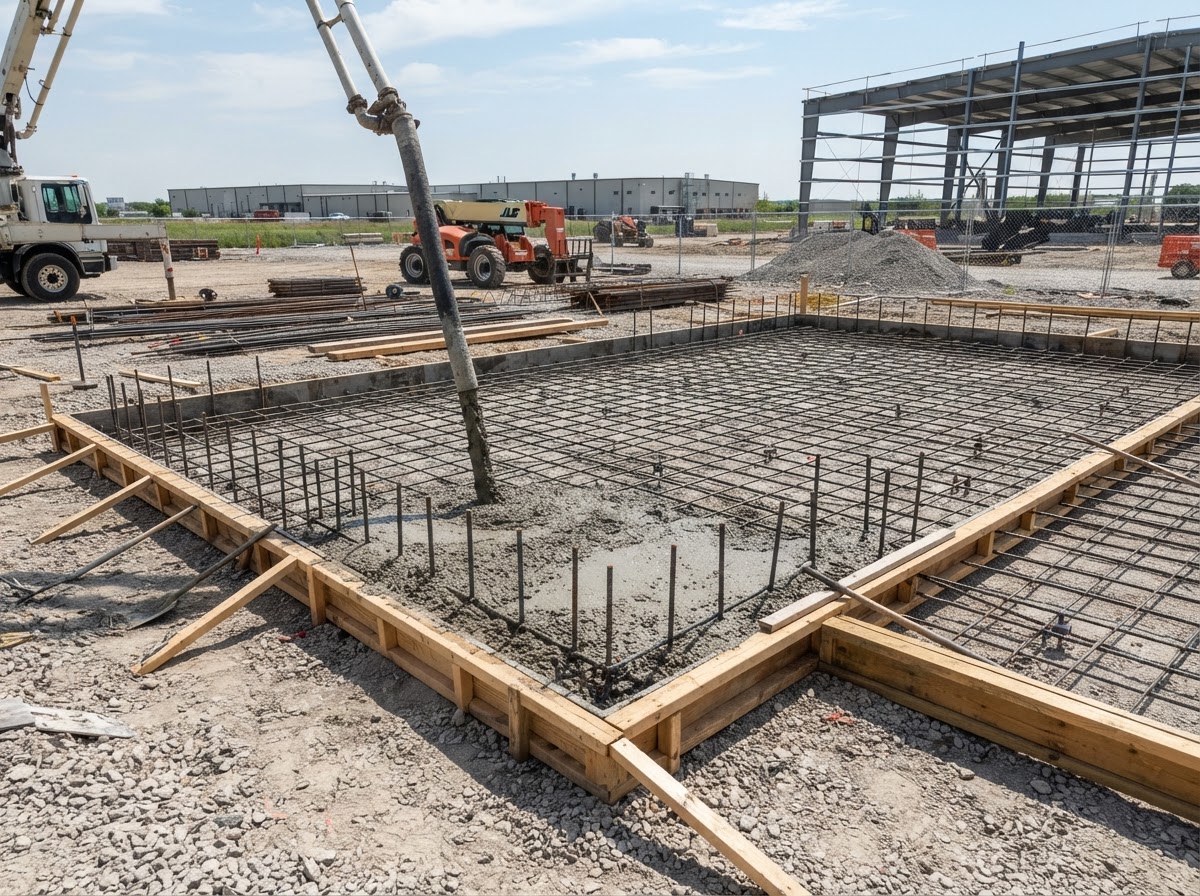
Many Germantown properties have room for sheds, generators, HVAC pads, and other outbuildings, so slab pours for accessory structures are common alongside driveways and patios. Slab thickness, base preparation, and reinforcement depend on the intended load and use — a shed pad and an equipment pad may have different requirements, and we plan the slab around what it will actually support rather than a single fixed spec. See our thickness, base, and reinforcement guide for the variables that affect slab planning.
Established Sections and Aging Flatwork
In established parts of Germantown, calls more often involve existing concrete that has aged — cracked driveway panels, settled walkways, spalling steps, and patios with surface wear. A settled but intact slab may be a leveling candidate; a stable slab with surface wear may be a resurfacing candidate; widespread cracking or a failed base usually points to replacement. We evaluate the slab before recommending the scope that will perform best.
Drainage, Slope and Runoff
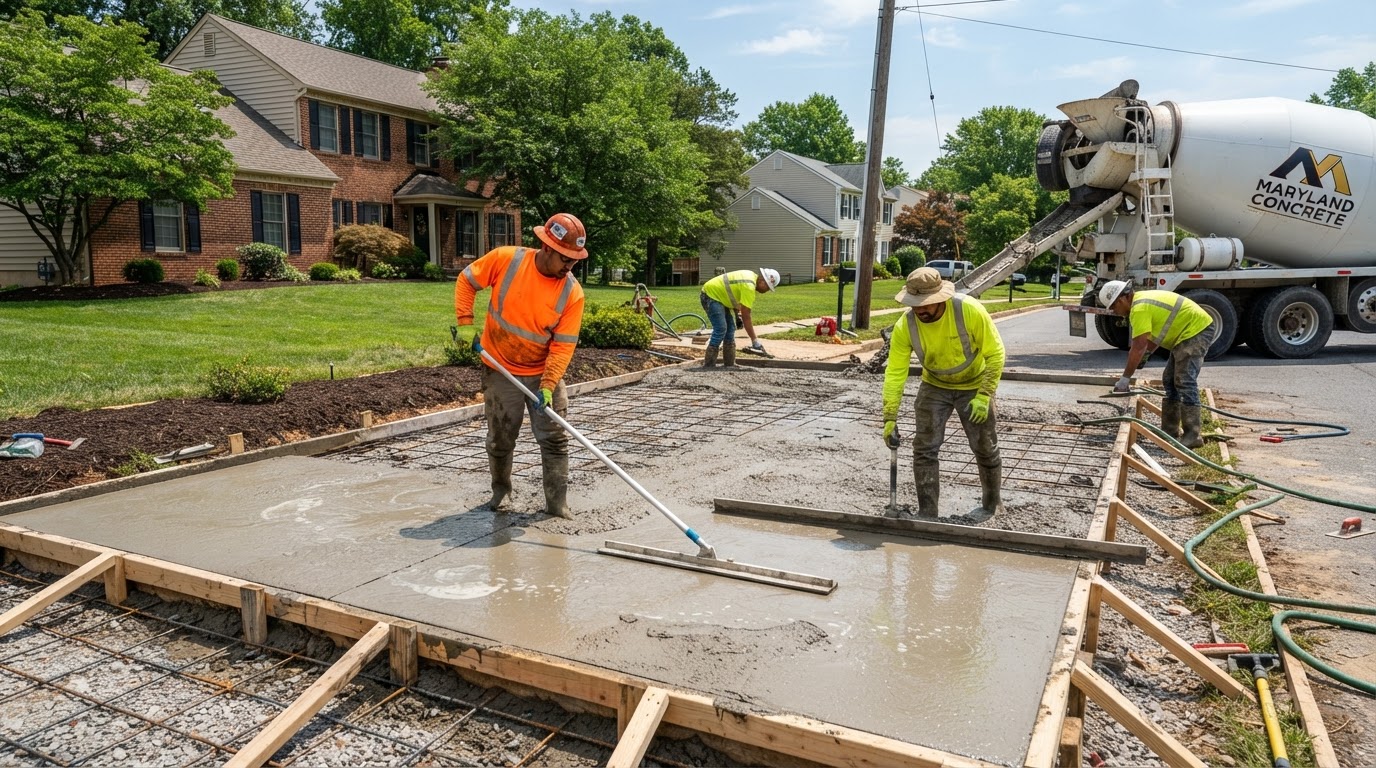
Where runoff concentrates against a foundation, pools at a garage entry, or erodes the base beneath a walkway or patio, the concrete above tends to crack, settle, or spall. On driveway and walkway projects we look at slope and drainage first, because a repair that ignores water will often fail again. Where water management is the underlying issue, trench drains, regrading, or coordinated drainage planning may be part of the scope — see our drainage and water-management guide.
Maryland Freeze-Thaw and Seasonal Exposure
Whatever the section, exterior concrete in Germantown has to hold up through Mid-Atlantic seasons — winter freeze-thaw cycles, spring rainfall, summer heat, and deicing salt exposure. Moisture that enters a slab and freezes can drive surface scaling and spalling over time, which is why drainage, joint placement, sealing where appropriate, and a finish suited to the traffic all shape long-term performance. Our freeze-thaw and deicing guide covers common seasonal deterioration factors.