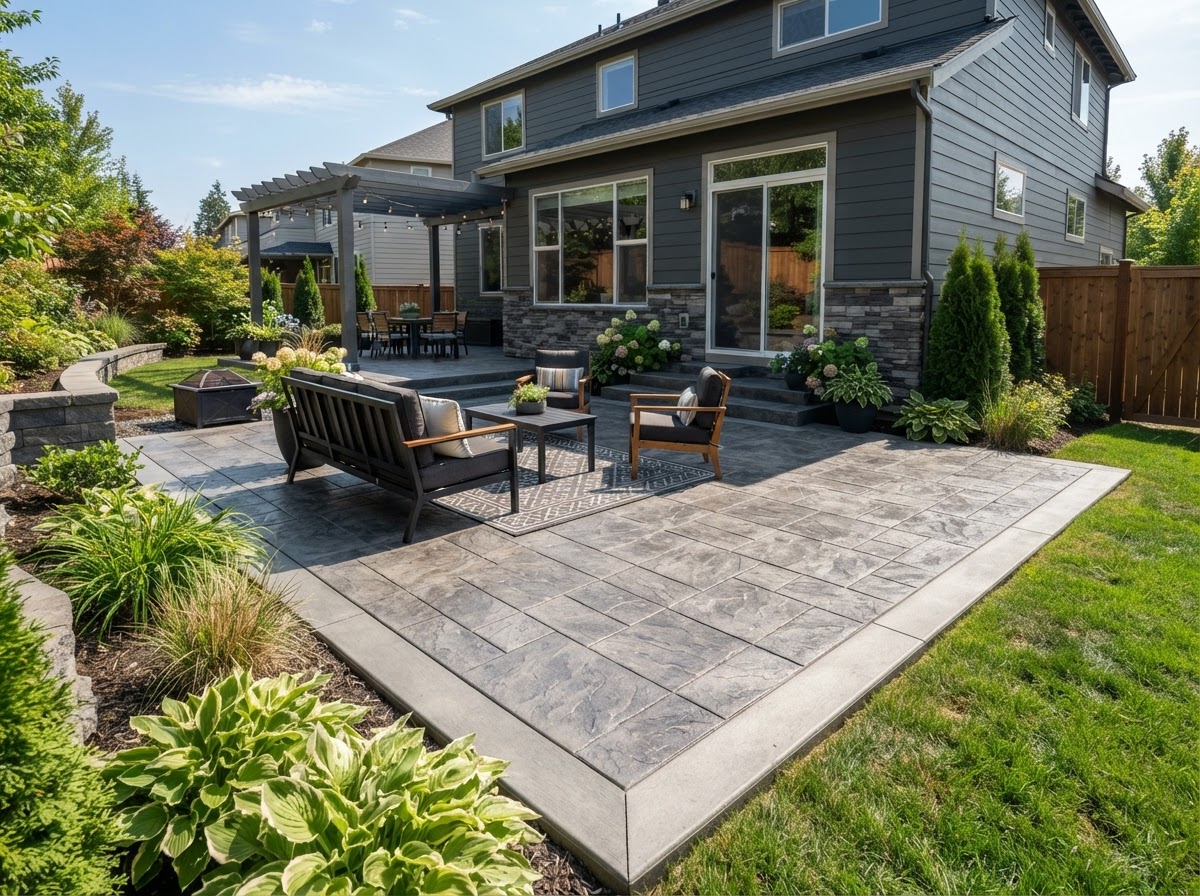
Glen Echo is a small residential community along the Potomac River in Montgomery County where wooded slopes and elevation changes are part of the setting. Concrete needs here often center on patios, walkways, steps, and retaining walls that have to manage grade changes and water movement at the same time — so drainage and retaining-wall planning are frequently part of a patio or walkway project rather than separate concerns.
Elevation Changes, Patios and Retaining Walls
Where a property sits on a slope, a patio or walkway may need a retaining wall, a set of steps, or a drainage plan to keep the surface stable and shed water correctly. A retaining wall that cracks, leans, or loses drainage behind it can affect the patio or walkway above it. We do not diagnose structural retaining-wall stability remotely — a leaning or heavily cracked wall needs on-site evaluation. See our retaining wall repair and retaining walls services for grade-change planning.
Drainage, Runoff and the Potomac Setting
On sloped, wooded lots, runoff tends to concentrate and move quickly across surfaces, which can erode the base beneath a walkway or patio and contribute to settlement and cracking. A saturated base is also more vulnerable to freeze-thaw damage. Where substantial runoff occurs, trench drains, regrading, or coordinated drainage planning may be part of the scope. See our drainage and water-management guide for how runoff and slope affect concrete.
Mature Trees, Roots and Walkway Concrete
Where mature tree canopy exists near walkways, patio edges, or retaining walls, property owners may need to consider root-related movement, adjacent grade, and drainage when evaluating cracked or uneven concrete. We do not assume roots caused a specific problem without inspection — on-site review determines whether movement, drainage, or surface age is the underlying factor.
Maryland Freeze-Thaw and Deicing Exposure
Exterior concrete in Glen Echo faces winter freeze-thaw cycles, moisture, saturation, ice, and surface drainage challenges. Moisture that enters a slab and freezes can contribute to scaling, spalling, and joint damage, and deicing salts tracked onto walkways and steps accelerate surface deterioration. Sealing where suitable, maintaining joints, and addressing drainage help a slab resist seasonal damage. Our freeze-thaw and deicing guide covers common seasonal deterioration factors, and our concrete sealing service explains how sealers help protect exterior surfaces.
Planning Outdoor Concrete on a Sloped Lot
Because elevation changes are common here, we plan patios, walkways, steps, retaining structures, and drainage together so water moves correctly and transitions stay safe. A sound slab with surface wear may be a resurfacing candidate; a settled but intact slab may be a leveling candidate; widespread cracking or a failed base usually points to replacement. Where a project involves a structure or the public right-of-way, permit or approval requirements depend on project type, property jurisdiction, and scope — see our local permit guide for where to verify current requirements.