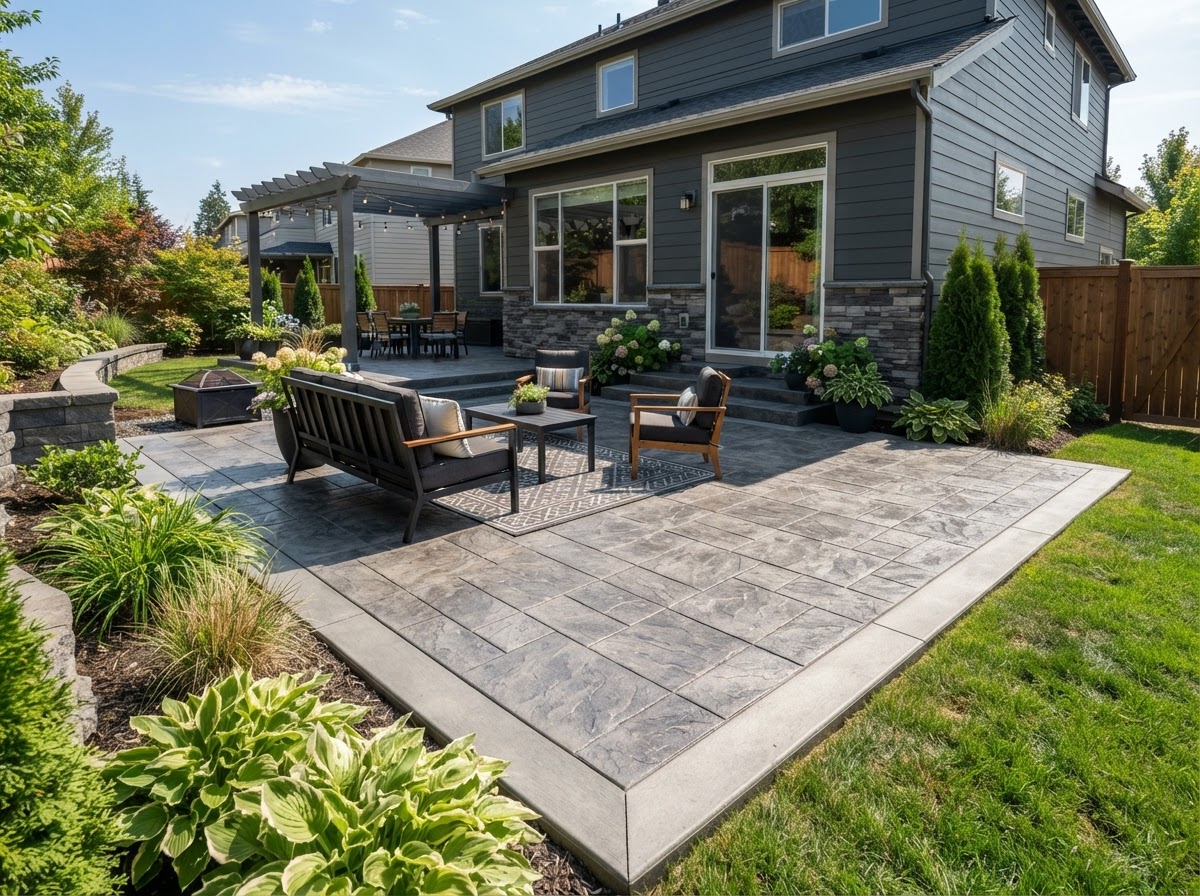
Sandy Spring is a community in eastern Montgomery County where larger lots, outdoor living space, and grade changes across the landscape shape the concrete decisions property owners face. Because property age, lot size, and terrain vary across the community, a project on one Sandy Spring property can look very different from one nearby — and the right scope depends on what is actually on the site.
Larger Lots, Grade Changes and Retaining Walls
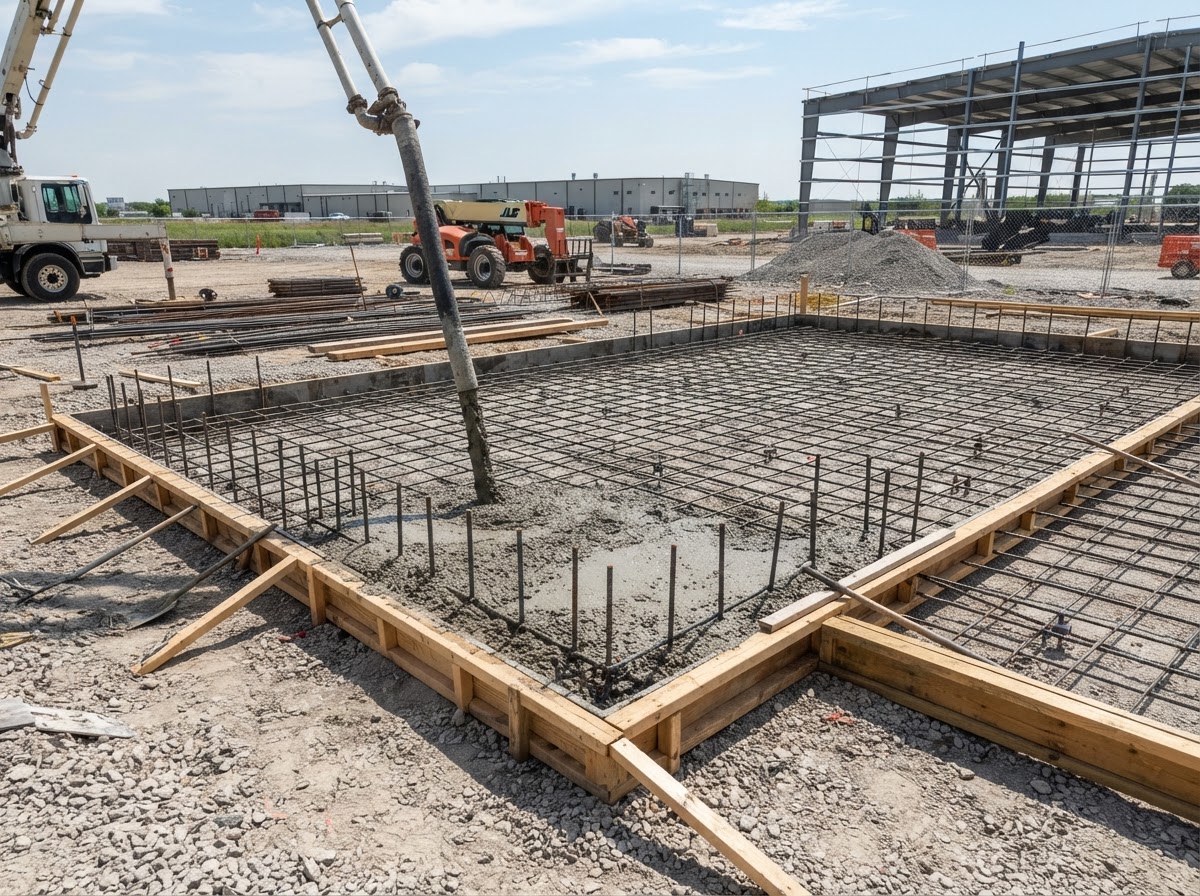
Where elevation changes are present, retaining walls and steps may be part of the scope — a driveway may transition to a retaining wall, a patio may sit above a walkway, or an entry may require steps and a stoop. Retaining wall design depends on the height, soil, drainage, and load rather than one fixed dimension. Many Sandy Spring properties also have room for outbuildings and equipment, so calls here often pair a driveway or patio with a shed pad, parking pad, or RV pad. Slab thickness, base preparation, and reinforcement depend on the intended load and use rather than one fixed spec.
Drainage, Runoff and Slope Conditions
Sandy Spring's larger lots and grade changes mean runoff can travel across a property and concentrate where it is least wanted. Where runoff concentrates against a foundation, pools at a garage entry, or erodes the base beneath a walkway or patio, the concrete above it tends to crack, settle, or spall. On driveway and walkway projects we look at slope and runoff first, because a repair that ignores drainage will often fail again. Where water management is the underlying issue, trench drains, regrading, or coordinated drainage planning may be part of the scope.
Maryland Freeze-Thaw and Deicing Exposure
Whatever the lot size, exterior concrete in Sandy Spring has to hold up through Mid-Atlantic seasons — winter freeze-thaw cycles, spring rainfall, summer heat, and deicing salt exposure. Moisture that enters a slab and freezes can drive surface scaling and spalling over time, and deicing salts tracked onto driveways and walkways accelerate surface deterioration. Drainage, joint placement, sealing where appropriate, and a finish suited to the traffic all shape long-term performance. Our freeze-thaw and deicing guide covers the common seasonal deterioration factors, and our drainage and water-management guide explains how runoff and slope affect concrete.
Planning Concrete Improvements for a Sandy Spring Property
For most Sandy Spring properties, the key planning decisions are driveway installation or replacement, patio installation for outdoor living, slab or pad pours for accessory structures, retaining walls where grade changes are present, and repair versus replacement for aging flatwork. Because many properties have larger lots and connected outdoor surfaces, coordinating drainage, finish, and transitions is often part of the plan. We review the slab's condition, whether movement is ongoing, the site's drainage, and how the surface will be used before recommending scope — see our repair vs. replacement and resurfacing vs. replacement guides.