Washington, DC is an urban environment where residential and commercial properties sit close together and much of the exterior concrete is older, so repair, leveling, and resurfacing of aging flatwork are common alongside new patio, walkway, and entry projects. Because property age, use, and site access vary widely across the District, a project in one DC neighborhood can look very different from one nearby — and the right scope depends on what is actually on the site.
Older Flatwork, Repair and Urban Site Access
Because many DC properties have older exterior concrete, calls here often involve cracked sidewalks, settled walkway panels, spalling entry steps, and patios that no longer drain the way they once did. Urban site access and logistics are factored into planning — demolition, equipment access, and sequencing on tight lots all shape how a project is completed. A settled walkway panel can often be lifted, and steps with worn treads can be repaired or replaced rather than rebuilt from scratch.
Residential and Commercial Flatwork in DC
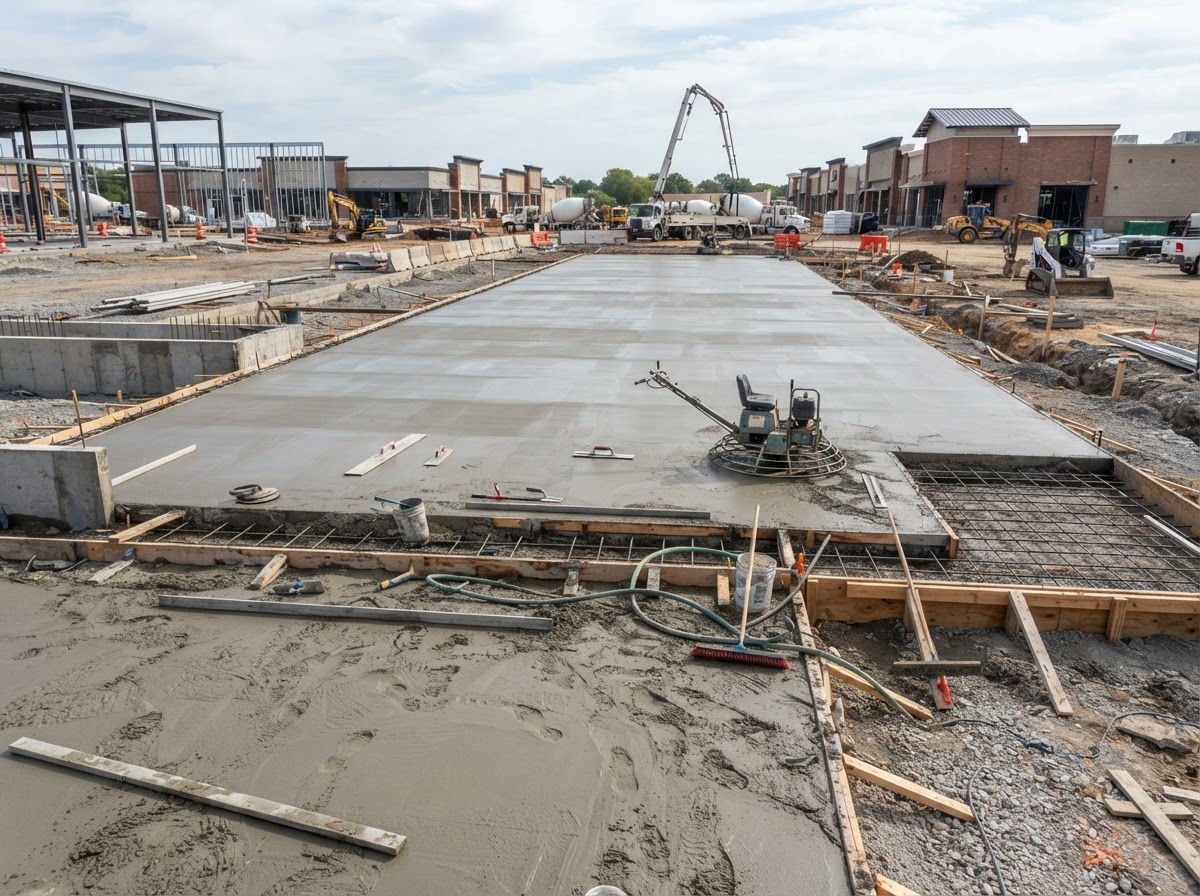
Residential properties in DC frequently need walkway and step work, patio installation, and repair or resurfacing of aging concrete. Commercial properties often need sidewalk repair, entry flatwork, or resurfacing of worn pedestrian surfaces. We handle private commercial flatwork for individual properties — we do not imply municipal or government contract work. Commercial projects are planned around traffic, pedestrian use, drainage, joint layout, and load demands rather than a single fixed spec.
Drainage, Slope and Stormwater Runoff
DC's mix of older lots and tight urban sites means drainage patterns are not always what the original grading intended. Where runoff concentrates against a foundation, pools at an entry, or erodes the base beneath a walkway or patio, the concrete above it tends to crack, settle, or spall. On walkway and step projects we look at slope and runoff first, because a repair that ignores drainage will often fail again. Where water management is the underlying issue, trench drains, regrading, or coordinated drainage planning may be part of the scope.
Mid-Atlantic Freeze-Thaw and Deicing Exposure
Whatever the property, exterior concrete in Washington, DC has to hold up through Mid-Atlantic seasons — winter freeze-thaw cycles, spring rainfall, summer heat, and deicing salt exposure. Moisture that enters a slab and freezes can drive surface scaling and spalling over time, and deicing salts tracked onto sidewalks and steps accelerate surface deterioration. Drainage, joint placement, sealing where appropriate, and a finish suited to the traffic all shape long-term performance. Our freeze-thaw and deicing guide covers the common seasonal deterioration factors, and our drainage and water-management guide explains how runoff and slope affect concrete.
Planning Concrete Improvements for a DC Property
For most DC properties, the key planning decisions are walkway and step repair versus replacement, patio installation or replacement, resurfacing versus replacement for surfaces with wear, commercial flatwork for business properties, and crack repair for isolated damage. Because many properties have older flatwork and tight site access, coordinating drainage, finish, and sequencing is often part of the plan. We review the slab's condition, whether movement is ongoing, the site's drainage, and how the surface will be used before recommending scope — see our repair vs. replacement and resurfacing vs. replacement guides.