Concrete Garage Floor Repair in Gaithersburg, MD
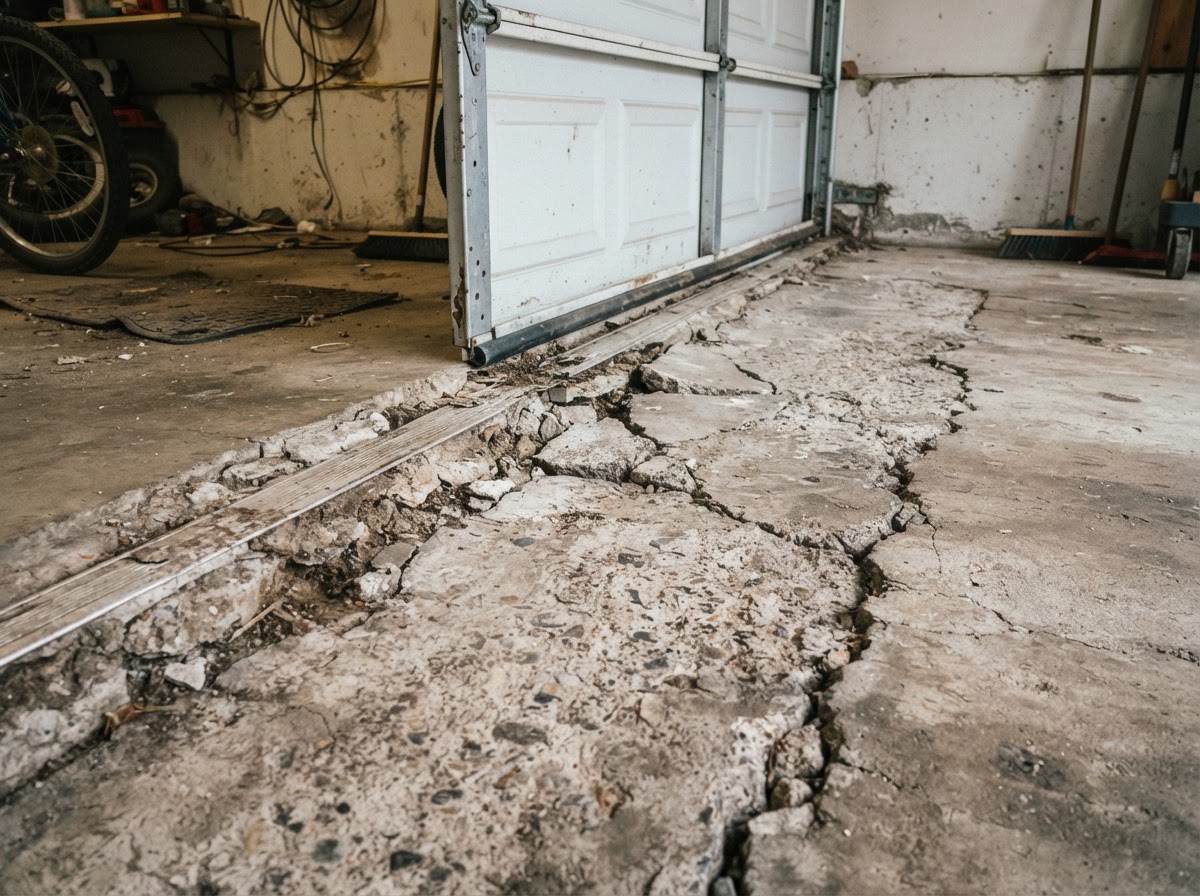
Concrete garage floors may be repairable when cracks, spalling, damaged thresholds, or other deterioration are limited and the slab remains suitable for restoration. Widespread cracking, major settlement, extensive slab failure, or unresolved moisture problems may make partial or full replacement more appropriate. In Gaithersburg, garage floors face a specific combination of stresses — vehicles tracking in road salt and moisture through the winter, freeze-thaw cycles near the entrance, and constant tire abrasion — so the goal is to extend the life of a slab that still has structural life left, and to be honest when replacement is the more durable call. Gaithersburg Concrete evaluates the slab, cracks, spalling, threshold, and drainage before recommending a scope.
Request a Free Estimate
Tell us about your concrete project in Gaithersburg or nearby.
Concrete Garage Floor Repair in Gaithersburg
Concrete garage floor repair is the targeted treatment of cracks, spalling, damaged thresholds, and localized deterioration on an existing garage slab that still has serviceable concrete around the damage. Rather than removing and repouring the entire floor, repair addresses the specific spots where the concrete has failed — extending the life of the surrounding slab and postponing the cost and disruption of full replacement.
Repair is not a substitute for replacement. It fits the middle ground: a garage floor where most of the slab is still sound but certain areas have cracked, spalled, or broken at the threshold or joints. Where the cracking is widespread, settlement is significant, the base has failed, or moisture problems remain unresolved, partial or full replacement is usually the more durable path. We assess the condition across the whole slab before recommending a scope.
This page covers repair of existing garage slabs — including attached and detached residential garages where appropriate — rather than new garage slab installation or complete replacement. Every garage floor repair starts with an inspection of the slab, cracks, spalling, threshold, joints, and any evidence of moisture or settlement before a repair approach is recommended.
Common Garage Floor Problems
Garage floors in the Gaithersburg area develop a familiar set of issues over years of vehicle traffic and winter exposure. The right response — repair, resurfacing, or replacement — depends on the condition of the slab and what is causing the damage.
Cracks
- Isolated cracks running through the slab
- Joint-related cracks where movement has stressed the concrete
- Repeated cracking that returns in the same location
Spalling and Scaling
- Surface deterioration where the top layer is flaking away
- Winter road salt carried in by vehicles contributing to surface breakdown
- Moisture and freeze exposure near the garage entrance where applicable
- General surface wear from years of vehicle traffic
Damaged Door Threshold
- Edge damage at the garage-door transition
- Transition deterioration where the slab meets the approach
- Water entry considerations at the threshold
Joint Damage
- Deteriorated joints where the concrete has broken down at the seams
- Edge breakdown at control or expansion joints
Settlement and Unevenness
- Low areas where the slab has dropped
- Garage-door transition issues where settlement affects the door seal
- Drainage implications where water pools because the slab no longer sheds correctly
| Problem | Possible Direction |
|---|---|
| Localized crack | Crack repair |
| Spalling | Repair or resurfacing evaluation |
| Damaged threshold | Localized repair or replacement |
| Settled slab | Leveling or replacement evaluation |
| Widespread failure | Replacement |
Garage Floor Repair Process
A durable garage floor repair depends on understanding what is actually happening with the slab before any repair material is placed. Repairing over an active problem — ongoing settlement, unresolved moisture, or structural movement — will not last, so the process starts with diagnosis.
- 1Inspect the slab — assess overall condition, stability, and the extent of damage.
- 2Identify cracks — map crack types, widths, and whether they are structural or surface-level.
- 3Evaluate spalling — assess the depth and extent of surface deterioration.
- 4Assess moisture evidence — look for water entry, staining, or drainage issues.
- 5Inspect joints — evaluate control and expansion joints for deterioration.
- 6Inspect the garage-door threshold — check the transition for damage and water entry.
- 7Evaluate settlement — determine whether the slab has dropped and whether the base is involved.
- 8Remove unsound material — cut back loose or deteriorated concrete to sound substrate.
- 9Prepare the repair area — clean and profile the surface as the repair system requires.
- 10Complete the appropriate repair — place repair material suited to the defect and surface.
- 11Finish and cure — match the surrounding texture as practical and cure per system requirements.
We do not claim that a repair will permanently stop active structural movement, and we do not claim that coatings fix structural cracks. Where the underlying cause is ongoing — settlement, base failure, or moisture — addressing that cause is part of a lasting result, not optional. A repair that ignores the cause will typically fail again.
Repair vs. Resurfacing vs. Coating vs. Replacement
Garage floor work spans a range of scopes, and the right one depends on the condition of the slab and what is causing the damage. Each option addresses a different problem:
When Each Approach Makes Sense
- Repair — localized slab damage: an isolated crack, one spalled area, or a damaged threshold on an otherwise sound floor.
- Resurfacing — a suitable stable surface with broader surface-level wear, scaling, or cosmetic deterioration across most of the slab.
- Epoxy or polyaspartic coating — a decorative or protective finish applied over properly prepared, suitable concrete.
- Full replacement — widespread slab failure, major settlement, a failed base, or extensive structural deterioration.
A coating is a surface treatment, not a structural repair. It does not structurally repair a failed slab, stop settlement, fix severe spalling automatically, or solve active moisture problems on its own. Where the slab beneath a coating is unsound, the coating will not perform — the concrete has to be suitable first. We are straightforward about when a floor needs repair or replacement before any coating is considered.
For new garage slab installation or complete replacement, see our concrete garage floors and slabs page. For general crack and surface repair, our concrete repair page; for cracks and joints specifically, our crack and joint repair services; for spalling, our spalling repair page; and for surface renewal, our concrete resurfacing and overlays services.
Maryland Winters, Road Salt & Garage Concrete
A garage floor in Gaithersburg faces a specific combination of stresses that most interior slabs do not. Vehicles bring in water, snow, and road salt through the winter, and that moisture sits on or runs across the slab near the entrance. Road salt carried in on tires contributes to surface scaling and spalling over repeated winter exposure — the salt does not melt the concrete, but it accelerates the breakdown of the surface layer through freeze-thaw cycling and chemical exposure.
Freeze-thaw cycles near the garage entrance are a recurring factor. Moisture that enters the surface or collects at the threshold expands as it freezes, stressing the concrete and any existing cracks. Standing water and poor drainage compound the problem — a slab that traps water near the door or slopes toward the interior will deteriorate faster than one that sheds water correctly. Drainage and slab elevation are central to how well a garage floor performs over time.
Surface deterioration accumulates from tire abrasion, foot traffic, and winter exposure. Cleaning and maintenance help, and sealing where appropriate can protect the surface from moisture and deicing salts. We do not promise a maintenance-free or salt-proof surface — a well-repaired, well-maintained garage floor handles Maryland conditions as well as the site and scope allow, and we advise on care to help it last.
For related planning, see our concrete repair cost guide for the factors behind repair estimates, our repair vs. replacement guide to weigh garage slab repair against full replacement, our concrete sealing service for protecting a repaired surface where appropriate, and our Maryland freeze-thaw and deicing guide for the winter road-salt exposure that ages garage concrete.
Not sure whether the garage floor should be repaired or replaced? Request an evaluation and we will assess the slab condition honestly.
Discuss Your Concrete Project
Have questions about scope, timing, or whether repair or replacement is the right call? We are happy to review your project and provide a clear, honest estimate.
Concrete Garage Floor Repair FAQs & Estimates
Can cracks in a garage floor be repaired?
Yes, many garage floor cracks can be repaired, especially isolated cracks on an otherwise stable slab. The crack is cleaned, opened as needed, and filled with a repair material suited to the crack width and type. Wider or structural cracks, or those linked to ongoing settlement, may need a different approach — we evaluate whether the crack is surface-level or structural before recommending a repair method.
Can garage floor spalling be repaired?
Yes, spalled and scaling garage floor surfaces can often be repaired by removing the loose material, preparing the substrate, and applying a compatible patching or repair material. The repair's longevity depends on addressing the cause of the spalling — often road salt, moisture, or freeze-thaw exposure — not just covering the surface. Where spalling is extensive or the slab is severely deteriorated, resurfacing or replacement may be more durable.
Why does road salt affect garage concrete?
Road salt carried in on vehicle tires does not melt concrete, but it accelerates surface deterioration. Salt residue draws moisture into the surface layer, and when that moisture freezes through freeze-thaw cycles, it stresses the concrete and contributes to scaling and spalling over repeated winter exposure. Drainage, sealing where appropriate, and cleaning help manage that exposure, but no surface is fully salt-proof.
Can a damaged garage-door threshold be repaired?
Yes, a damaged garage-door threshold can often be repaired when the damage is localized to the edge or transition. The broken material is removed, the area is prepared, and the threshold is restored to match the surrounding elevation and the garage-door seal. Where the threshold damage is part of broader slab failure, replacement of the affected section may be more appropriate.
Can a garage floor be resurfaced?
Sometimes. A garage floor can be resurfaced when the underlying slab is stable and the deterioration is primarily surface-level — wear, light scaling, or cosmetic aging. If the slab has structural cracking, ongoing settlement, or a failed base, resurfacing will not hold and repair or replacement is the better call. We assess the slab condition before recommending resurfacing.
Can epoxy be applied over a repaired garage floor?
A coating can be applied over a properly repaired and prepared garage floor when the slab is suitable, but a coating is a surface treatment, not a structural repair. It does not stop settlement, fix structural cracks, or solve active moisture problems. Where the slab is sound, a coating may follow repair work — but the concrete has to be suitable first. We are straightforward about when a floor needs repair or replacement before any coating is considered.
When should a garage slab be replaced?
A garage slab is typically a replacement candidate when cracking is widespread across most of the floor, settlement is significant with base involvement, the slab has extensive structural deterioration, or repeated repairs no longer hold. Replacement involves removing the old slab, preparing the base, and pouring a new floor planned for the garage's intended use. We recommend replacement where repair would not deliver a durable result.
Request a Concrete Garage Floor Repair Estimate
Have cracks, spalling, or a damaged threshold on your garage floor? Gaithersburg Concrete will assess the slab condition and give you an honest recommendation — repair, resurface, or replace. Call (240) 690-6035 or request a free estimate.
Related Concrete Services Near Gaithersburg
Concrete Garage Floors & Garage Slabs
New garage slab pours and replacement garage floors built for vehicle loads, storage, and workshop use.
Learn moreConcrete Repair & Crack Repair
Targeted structural crack filling, spalling remediation, and damaged section patching to extend concrete longevity.
Learn moreConcrete Crack Repair & Expansion Joint Repair
Repair of concrete cracks, control joints, expansion joints, and gaps between slabs on driveways, patios, and walkways.
Learn moreSpalling, Flaking & Crumbling Concrete Repair
Repair of spalling, flaking, scaling, and crumbling concrete surfaces on driveways, patios, and walkways.
Learn moreConcrete Resurfacing & Concrete Overlays
Restorative polymer-modified micro-toppings and decorative cement overlays for structurally sound yet worn concrete.
Learn moreRequest a Concrete Garage Floor Repair Estimate
Have cracks, spalling, or a damaged threshold on your garage floor? Gaithersburg Concrete will assess the slab condition and give you an honest recommendation — repair, resurface, or replace. Call (240) 690-6035 or request a free estimate.
- Project-specific estimates — no obligation
- Residential and commercial concrete work
- Serving Gaithersburg and surrounding Montgomery County
Request a Free Estimate
Tell us about your concrete project in Gaithersburg or nearby.