How Long Does Concrete Take to Cure in Maryland?
How long concrete takes to cure in Maryland depends on concrete mix proportions, ambient temperature, moisture levels, slab thickness, and intended traffic loads. Concrete does not achieve its strength instantaneously — setting, curing, and strength development are distinct phases in hydraulic cement hydration. Understanding the difference between when concrete is firm enough for foot traffic versus when it has gained sufficient strength for passenger vehicles, heavy equipment, or hot tubs helps property owners avoid premature surface and structural damage. This guide from Gaithersburg Concrete explains curing timelines, seasonal temperature impacts in Maryland, and practical guidelines for protecting fresh concrete.
Request a Free Estimate
Tell us about your concrete project in Gaithersburg or nearby.
How Long Does Concrete Take to Cure?
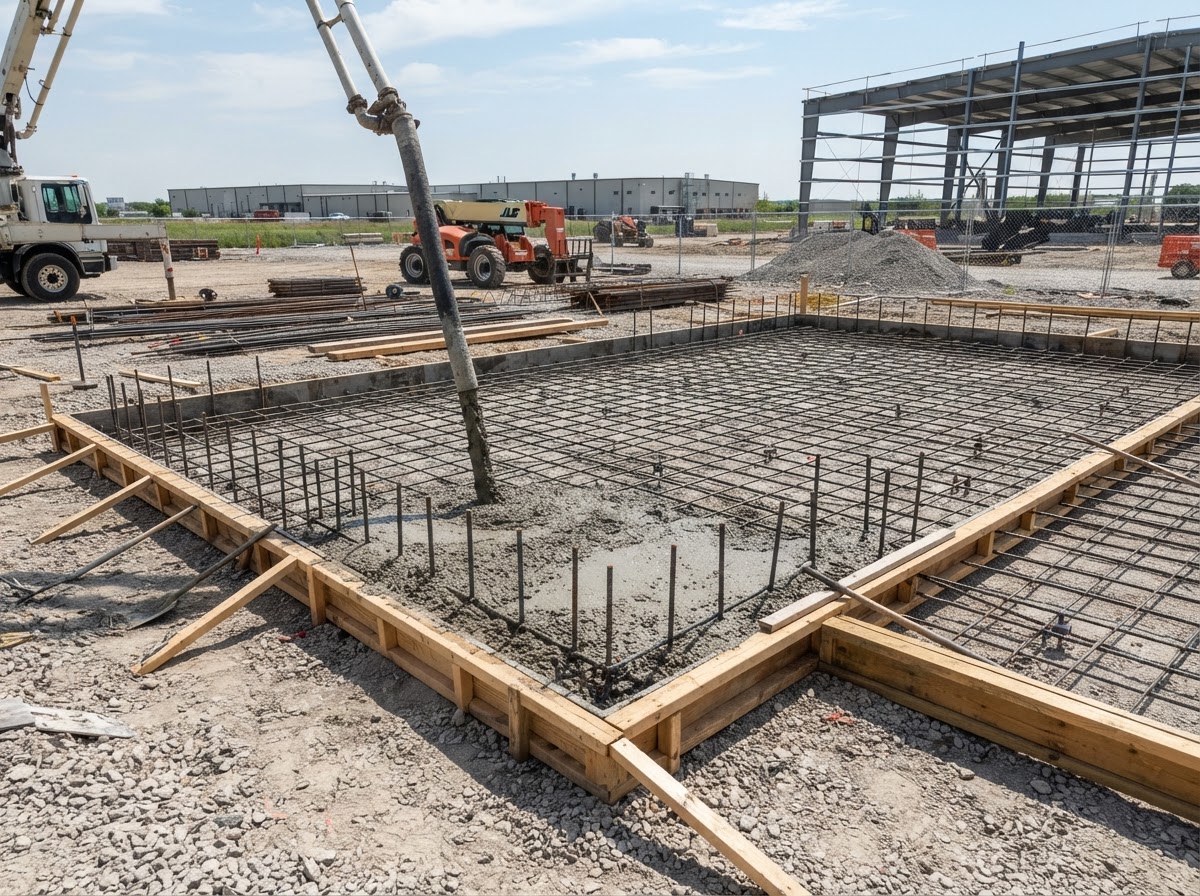
How long concrete takes to cure depends on the concrete mixture, ambient temperature, humidity, moisture management, slab thickness, and intended use. Concrete does not achieve full strength immediately — setting, curing, and strength gain occur gradually over days and weeks as hydraulic cement hydrates. The time before walking, driving, or placing heavy equipment on fresh concrete differs significantly depending on the load.
General Functional Use Guidelines
- Initial Set (1 to 2 Hours): Concrete transitions from a plastic, workable state into a solid surface.
- Light Foot Traffic (24 to 48 Hours): Under standard warm weather conditions, light foot traffic is typically safe once contractor inspection confirms the surface has hardened.
- Passenger Vehicles (7 Days): New driveways generally reach sufficient compressive strength (typically 70% of design strength) to support passenger cars after 7 days of proper curing.
- Heavy Trucks & Equipment (28 Days): Full specified design compressive strength (such as 3,000 to 4,500 PSI) is standardly evaluated at 28 days under ASTM standards.
Key Curing Factors
Curing is an ongoing chemical reaction (hydration) between cement and water, not simply drying out. In fact, keeping concrete moist during early curing increases final strength and surface durability.
Setting, Curing & Strength Development Are Different
Homeowners frequently confuse initial setting, moisture loss, and compressive strength gain. Understanding these terms helps set realistic expectations for project scheduling:
1. Initial & Final Setting
Setting refers to the initial stiffening of the fresh concrete mixture. Initial set occurs within a few hours of batching and placement when finishers complete jointing, edging, and broom texturing. Final set occurs when the slab can support light surface contact without indentation.
2. Concrete Curing
Curing is the deliberate process of maintaining adequate moisture content and favorable temperatures (typically between 50°F and 85°F) in fresh concrete for a defined duration. Proper curing allows hydration to continue, filling capillary pores and building high density, abrasion resistance, and freeze-thaw durability.
3. Strength Gain Over Time
Under standard testing conditions (73°F), standard concrete achieves approximately 40–50% of its design strength in 3 days, 65–75% in 7 days, and 95–100% at 28 days. Hydration continues at a declining rate for months or years if moisture remains present.
What Changes Concrete Curing Time?
Environmental conditions and concrete formulation alter hydration rates dramatically. Key variables include:
Temperature & Thermal Mass
Hydration accelerates in warm weather and slows in cold temperatures. At 90°F, concrete sets quickly and requires diligent moisture retention to prevent shrinkage cracking. At 40°F, strength gain slows substantially, doubling the required curing period before vehicle access.
Concrete Mix Design & Accelerators
High-early-strength mix designs, lower water-cement ratios, and non-chloride chemical accelerators speed up early strength gain when fast reopening is required. Conversely, supplementary cementitious materials such as fly ash slow early strength gain while enhancing long-term durability.
Slab Thickness & Moisture Management
Thicker slabs hold heat longer, which aids internal curing in moderate temperatures. Using curing compounds, liquid membrane sealers, wet burlap, or poly sheeting prevents surface moisture evaporation during critical early hours.
When Can You Walk, Drive or Place Equipment on New Concrete?
Before using a newly poured concrete surface, consult your contractor for site-specific guidance based on ambient temperatures and mix specs:
Light Foot Traffic (24–48 Hours)
Avoid walking on fresh concrete until 24 hours have passed in mild weather. Keep pets and children off the surface during this period to prevent scuffing or claw impressions.
Passenger Cars & Light Trucks (7 Days)
Driveways and parking pads should be protected from passenger vehicle tires for at least 7 full days under standard spring, summer, or fall weather conditions.
Hot Tubs, Sheds & Heavy Load Pads (14–28 Days)
Heavy concentrated point loads — such as a filled hot tub (weighing 3,000–5,000 lbs), a heavy storage shed, or industrial machinery — require at least 14 to 28 days of curing to prevent slab cracking.
Concrete Curing in Maryland Weather
Maryland's mid-Atlantic climate brings distinct seasonal conditions that affect curing practices in Gaithersburg and Montgomery County:
Summer Curing (High Heat & Sun)
Hot Maryland summer days (85°F+) combined with direct sunlight and wind accelerate evaporation. Contractors apply liquid curing membranes immediately after finishing or use wet curing blankets to prevent surface plastic shrinkage cracks.
Spring & Fall Curing (Ideal Windows)
Moderate temperatures (55°F to 75°F) in spring and autumn provide optimal natural conditions for uniform cement hydration and minimal thermal stress.
Winter Curing (Cold & Freeze Risk)
When temperatures drop below 40°F, concrete hydration slows dramatically. Fresh concrete must be protected from freezing for at least 48 hours until it achieves a minimum compressive strength of 500 PSI, using insulating blankets or heated enclosures.
How to Protect New Concrete While It Cures
Homeowner Care Checklist
- Keep Vehicles Off: Do not park cars or drive equipment onto new driveways for at least 7 days.
- Avoid Deicing Chemicals: Do not apply chemical deicers or rock salt during the first winter following placement.
- Prevent Lawn Irrigation Runoff: Keep sprinklers off fresh concrete during the initial 48 hours.
- Protect Edges: Avoid driving or parking heavy machinery near unbacked slab edges while backfilling is completed.
- Follow Contractor Instructions: Adhere to any specific curing or sealing timelines provided by your installation team.
Questions to Ask Your Contractor
- What mix design and design strength was specified for this slab?
- When is it safe for foot traffic vs. vehicle parking on this specific job?
- What curing method (membrane, wet cure, compound) was applied?
- When should a breathable concrete sealer be applied?
Discuss Your Concrete Project
Have questions about scope, timing, or whether repair or replacement is the right call? We are happy to review your project and provide a clear, honest estimate.
Concrete Curing FAQs
How long does concrete take to fully cure?
Concrete reaches its standard specified design compressive strength in 28 days under standard industry testing standards (ASTM C31/C39). However, hydration continues at a declining rate for months or years whenever moisture is present.
When can I walk on new concrete?
In mild weather (60°F–80°F), light foot traffic is typically safe 24 to 48 hours after finishing. Keep pets and heavy items off the surface during this time.
When can I drive on a new concrete driveway?
Passenger vehicles can usually park on a new concrete driveway after 7 days of proper curing in warm weather. Heavy vehicles or delivery trucks should wait 28 days.
Does concrete cure slower in cold weather?
Yes. Cement hydration slows significantly below 50°F and virtually stops below 40°F. In cold weather, concrete requires insulated curing blankets and extended wait times before vehicle access.
Can rain damage newly poured concrete?
Heavy rain within the first 2 to 4 hours before the concrete reaches initial set can wash away cement paste and ruin the surface finish. Rain occurring after final set typically does not harm the surface and actually aids moisture curing.
When can a hot tub or shed be placed on a new concrete pad?
A heavy concentrated load like a filled hot tub or storage shed should not be placed on a new slab for at least 14 to 28 days to ensure adequate compressive strength.
Why is proper concrete curing important?
Proper curing increases surface hardness, reduces permeability, improves freeze-thaw resistance, minimizes shrinkage cracking, and extends the long-term service life of outdoor concrete.
Planning a New Concrete Project in Gaithersburg?
Gaithersburg Concrete provides professional concrete driveway, patio, walkway, and slab installation with proper mix designs, placing, finishing, and curing methods tailored to Maryland weather conditions. Call (240) 690-6035 or request a free estimate.
Keep Learning About Concrete in Gaithersburg
Concrete Thickness, Base & Reinforcement Guide
How intended use, loads, site conditions, base preparation and reinforcement affect concrete slab planning for driveways, patios and pads.
Read the guideMaryland Freeze-Thaw, Deicing Salt & Concrete Damage Guide
How freeze-thaw cycles, moisture, and deicing salts cause scaling and cracking in Maryland, plus winter protection strategies.
Read the guideConcrete Cost Guide for Gaithersburg, MD
What affects concrete project costs in Gaithersburg — size, demolition, access, base, thickness, reinforcement, finish, grading and drainage.
Read the guideRelated Concrete Services Near Gaithersburg
Concrete Driveway Installation & Replacement
Durable residential and light commercial concrete driveways built to withstand vehicular weight and Maryland freeze-thaw cycles.
Learn moreConcrete Patio Installation & Replacement
Custom concrete backyard patios engineered for outdoor living, cookouts, and year-round family entertainment.
Learn moreConcrete Garage Floors & Garage Slabs
New garage slab pours and replacement garage floors built for vehicle loads, storage, and workshop use.
Learn moreConcrete Hot Tub Pads & Spa Slabs
Concrete hot tub and spa pads poured to carry the combined weight of a filled spa, water, and occupants.
Learn morePlanning a New Concrete Project in Gaithersburg?
Gaithersburg Concrete provides professional concrete driveway, patio, walkway, and slab installation with proper mix designs, placing, finishing, and curing methods tailored to Maryland weather conditions. Call (240) 690-6035 or request a free estimate.
- Project-specific estimates — no obligation
- Residential and commercial concrete work
- Serving Gaithersburg and surrounding Montgomery County
Request a Free Estimate
Tell us about your concrete project in Gaithersburg or nearby.